500mm f/6.3 Mirrorless Telephoto: Sharp Reach Guide
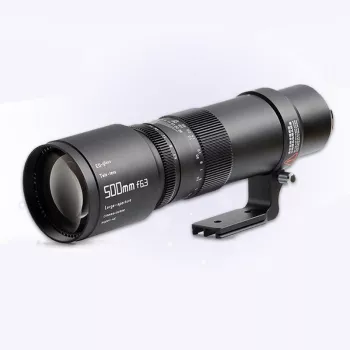
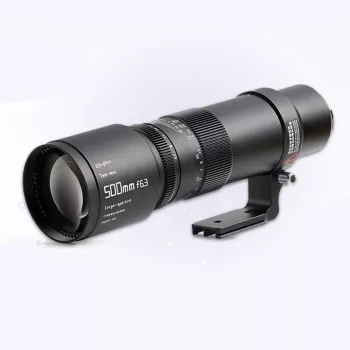
500mm f/6.3 Telephoto Full Frame Lens for Mirrorless Cameras: Reach, Handling, and Real-World Use
A 500mm telephoto on a full-frame mirrorless body delivers tight framing for wildlife, distant action, and compressed landscapes—often without leaning on heavy crops. The trade-off is that small technique mistakes become obvious: shake is amplified, focus needs to be precise, and air quality can matter as much as optics. Below is a practical, field-oriented look at what to expect from a 500mm f/6.3 lens, how to set up for sharp results, and when this focal length truly shines. For more guidance, see Amazon.com : Canon RF70-200mm F2.8 L is USM Lens, Mirrorless ….
What a 500mm telephoto does differently
At 500mm, distant subjects stop looking “far away.” You can fill the frame with birds, athletes across a field, or details on a ridge line that would otherwise be tiny—even on a full-frame sensor. For further reading, see Find a Lens | Micro Four Thirds.
- Strong subject isolation: When backgrounds are far behind your subject, blur becomes smooth and distraction-free, even at f/6.3.
- Perspective compression: Distant elements appear closer together, which can create dramatic layers in landscapes and city scenes.
- Less reliance on cropping: Keeping more pixels on the subject can preserve fine detail and reduce noise from aggressive crops.
- Technique gets “magnified” too: Camera shake, tiny focus errors, and atmospheric shimmer are more noticeable than with shorter lenses.
If you want a quick refresher on how focal length changes what you see, Nikon’s overview is a clear reference: Understanding lens focal length.
Best use cases for a 500mm f/6.3 on mirrorless
A 500mm f/6.3 is a “reach-first” tool: it’s at its best when you can’t get closer, or when getting closer would ruin the moment (or spook the subject).
- Birding and wildlife: Frame small, skittish animals without pushing into their comfort zone.
- Outdoor sports and motorsport: Isolate a player, skier, or car across a field or track with clean composition.
- Moon and distant detail: Large lunar frames are possible, but stability and focus discipline are critical.
- Compressed landscapes: Stack ridgelines, buildings, or trees for a bold “layered” look.
- Travel and observation: Photograph landmarks and architectural details from viewpoints where access is limited.
Scenario-to-settings starting points
| Scenario | Shutter speed target | Aperture starting point | ISO guidance | Focus approach |
|---|---|---|---|---|
| Birds in flight | 1/1600–1/3200 | f/6.3–f/8 | Raise ISO as needed | Continuous AF + tracking |
| Perched wildlife | 1/500–1/1000 | f/6.3–f/8 | Keep ISO moderate | Single point / small zone |
| Field sports | 1/1000–1/2000 | f/6.3–f/7.1 | Auto ISO often works well | Continuous AF + zone |
| Moon | 1/125–1/250 | f/6.3–f/8 | ISO 100–400 | Manual focus / magnified view |
| Landscapes (compressed) | 1/250+ handheld (or slower on tripod) | f/8–f/11 | Base ISO when possible | AF-S or manual |
For a deeper explanation of how shutter speed interacts with motion and blur, Adobe’s primer is a solid resource: Understanding shutter speed.
Handling and stability: getting sharp images at 500mm
Sharpness at 500mm is mostly a stability game. Even with in-body stabilization or optical stabilization, your shutter speed and technique are doing the heavy lifting.
Aperture f/6.3: light, depth of field, and background control
If you want to visualize how depth of field changes with distance and aperture, Cambridge in Colour’s guide is a reliable reference: Depth of field.
Autofocus and manual focus: practical tips for mirrorless bodies
Image quality factors at long distances
Product spotlight: 500mm f/6.3 Telephoto Full Frame Lens for Mirrorless Cameras
For photographers building a long-reach kit, the 500mm f/6.3 Telephoto Full Frame Lens for Mirrorless Cameras is designed for tight framing on full-frame mirrorless systems—especially useful for wildlife, sports, and distant detail. It’s a strong focal length when you want subject magnification in-camera, then fine-tune composition with smaller crops instead of relying on heavy trimming.
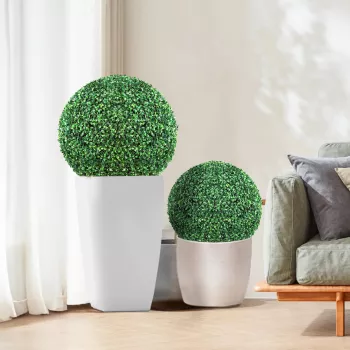
For practice and quick “at-home” technique tests (focus accuracy, stabilization behavior, and background blur), a textured subject can help. A small décor piece like an Artificial Green Plant Ball makes an easy target for checking fine detail and bokeh transitions, and a pet perch like a Large Cat Tree for Indoor Cats can double as a predictable spot to practice tracking and timing.
Quick checklist before buying
| Check | Why it matters | What to confirm |
|---|---|---|
| Mount compatibility | Ensures correct fit and full functionality | Camera mount and any adapter requirements |
| Weight and balance | Affects handheld comfort and keeper rate | Total carry weight and handling on your body |
| Minimum focus distance | Determines how close you can shoot | Closest focus specs for small wildlife/details |
| Stabilization support | Helps reduce blur at long focal lengths | Lens/body stabilization behavior and settings |
| Return/support policy | Protects against fit or performance issues | Warranty and return window |
FAQ
Is a 500mm f/6.3 lens practical for handheld shooting?
Yes in good light with fast shutter speeds and solid technique. For long sessions, wind, or lower light, a monopod or tripod usually improves sharpness and comfort.
What shutter speed is a safe starting point at 500mm?
Start around 1/1000s for general handheld use, then increase to 1/1600–1/3200s for birds in flight or fast action. Adjust based on stabilization performance and how quickly your subject is moving.
Why do distant subjects sometimes look soft even with correct focus?
Atmospheric haze and heat shimmer can reduce apparent detail before the light even reaches your lens. Shooting in cooler conditions, reducing distance, and avoiding midday heat over pavement or water can help.







Leave a comment